
Top 6 Strategies for Hiring Dental Hygienists Long-Term
By Dr. Brian Passell and the DDS Recruit team ·
Summary: To hire dental hygienists who stay long-term, focus on fit and retention rather than just compensation. Consider using specialized recruiters like DDS Recruit for culture-first hiring, or Frontline Source Group for temporary and contract-to-hire solutions. Emphasize cultural compatibility and HR structure with firms like Mayday Dental Staffing and MedWay to ensure a supportive work environment that aligns with the practice's needs.
An owner-dentist staring at an open hygiene chair often bumps the hourly wage by two dollars and refreshes an online job listing. That reaction rarely solves the underlying breakdown. Money pulls in resumes, but money alone never shows whether an applicant fits the clinical tempo, periodontal philosophy, doctor communication patterns, or chairside expectations of your clinic.
Finding the top strategies for hiring dental hygienists who stay long-term requires viewing the challenge through retention and day-to-day compatibility rather than candidate volume. Practice leaders have to determine what holds them back. The problem might be immediate coverage, structural human resources deficits, departmental leadership gaps, uncompetitive pay packages, or cultural mismatch.
The scramble across the dental industry explains why owners make rushed hiring choices. An April 2026 analysis by the ADA Health Policy Institute, cited in the American Dental Hygienists' Association workforce statement, showed that only 60% of dentists reported adequate hygiene staffing in their practices. That same research noted that 91% of active recruiters rated hiring dental hygienists as very or extremely challenging. Evaluating six distinct hiring strategies lets practice owners address their specific operational bottleneck instead of repeating the same generic recruiting cycle.
1. DDS Recruit: best for culture-first hygienist recruiting
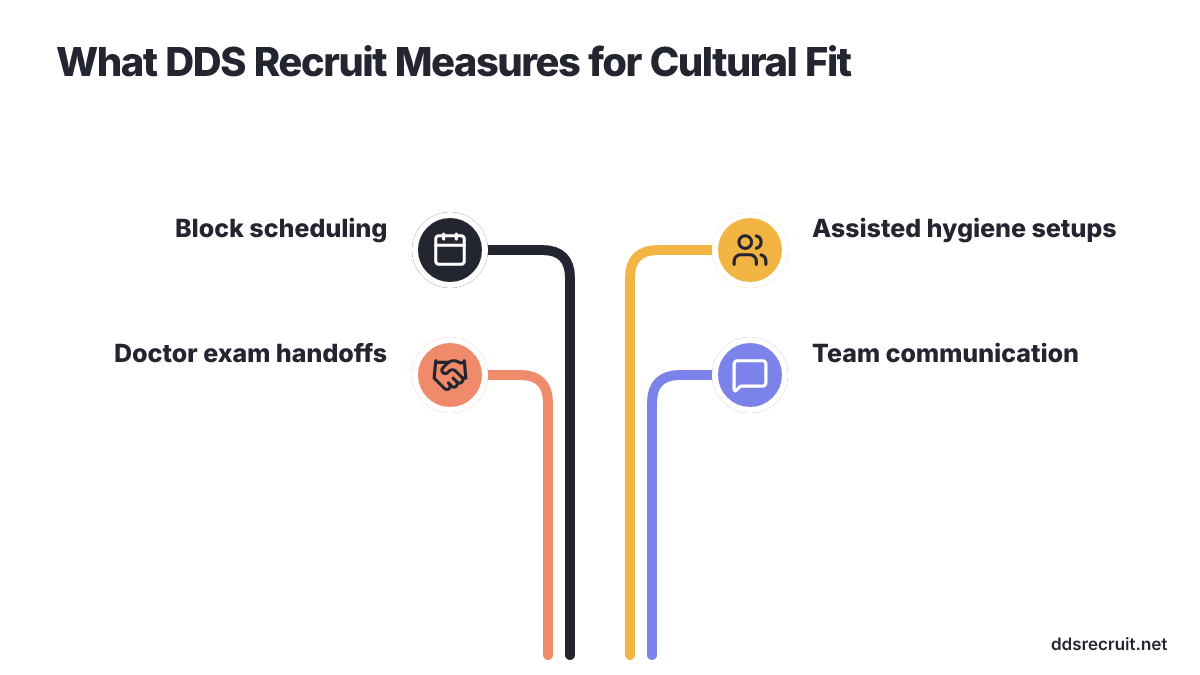
DDS Recruit runs dental hygienist recruiting for U.S. Practices and DSOs that want a permanent hire over a thick stack of applicants. The search firm works exclusively within dentistry, brings 17 years spent inside dental practices, and manages the placement process end to end across sourcing, candidate screening, and doctor introductions while putting cultural alignment ahead of paper credentials. Practice owners who have burned months paying for generic job boards with poor results get the most out of this targeted model. Five resumes from unvetted applicants tell a doctor nothing about how someone handles a tight schedule or diagnostic standards. DDS Recruit builds searches around daily clinic life, measuring how an applicant feels about block scheduling, assisted hygiene setups, doctor exam handoffs, and team talk.
Looking for operational fit matches national retention research. A 2022 labor market study published jointly by the ADA Health Policy Institute and the American Dental Hygienists' Association found that work-life balance and positive culture ranked alongside clinical autonomy and patient care as primary retention drivers for dental hygienists. Hiring based only on an active state license ignores the workplace friction that makes new clinicians quit inside their first ninety days.
Clear terms and replacement agreements lower the exposure when hiring permanent staff:
- If a hire leaves within the first year, our team conducts a replacement search without an added fee under our one-year placement guarantee.
- Under the Path A search retainer, offices pay a nominal monthly search fee along with a success fee that comes due only when a placement sticks.
- The Path B executive search evaluates clinic culture and follows the clinician through a 90-day ramp-up after placement.
This full recruiting service still has limits. When someone calls out sick and tomorrow's schedule is completely exposed, DDS Recruit is the wrong phone call to make. A one-week hygiene gap needs a temporary staffing agency because quick staffing handles calendar triage, whereas long-term recruiting takes deliberate candidate evaluation.
Clinics looking to expand provider capacity can coordinate searches together through DDS Recruit, which handles associate dentist recruiting, in-house dental specialist recruiting, and dental hygienist searches under one specialized team. Clinicians and practice managers can browse active dental job postings directly on the website, and clinic owners can review full hygienist recruiting details before scheduling an initial consultation.
2. Frontline Source Group: best for temp coverage and try-before-you-hire
Frontline Source Group's staffing shortage guide lays out a practical path for dental offices that need a hygienist fast. The agency handles contract staffing for sudden patient spikes or surprise leaves, contract-to-hire arrangements that let practices watch how someone works before a permanent offer, and direct hire recruiting backed by a 5-Year Placement Warranty.
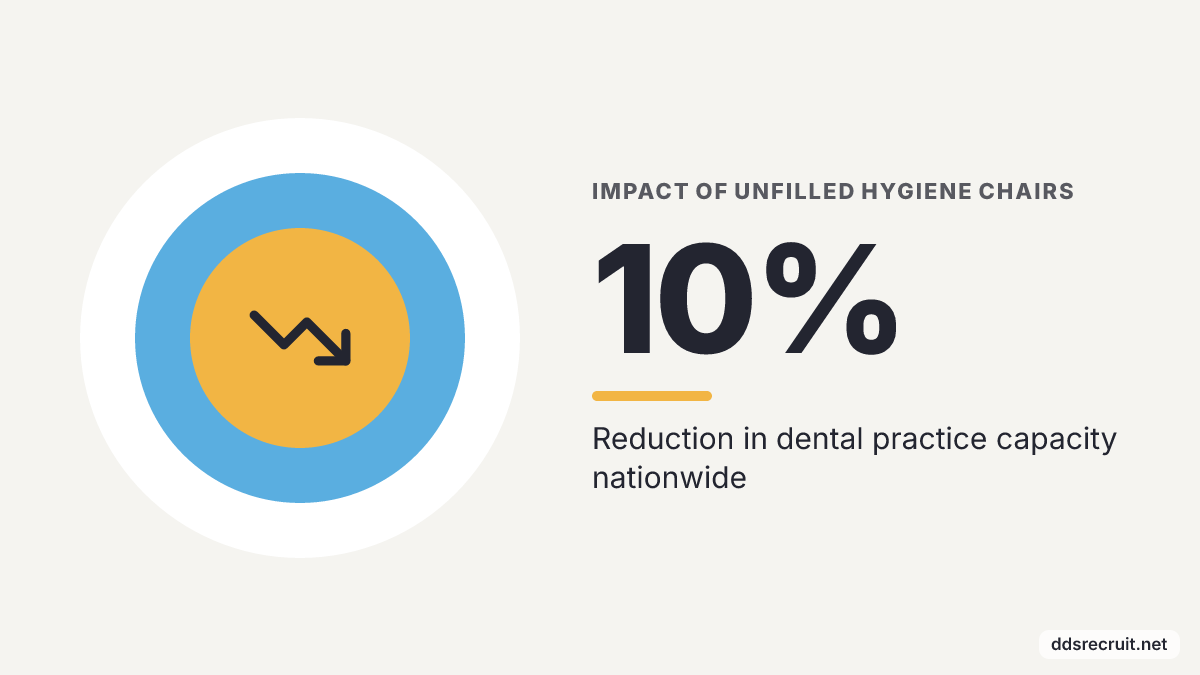
Temporary contract staffing gives a dental practice breathing room when someone leaves without warning. A hygiene opening can push routine cleanings out for months, force the front desk to reshuffle high-value patients, or leave the remaining hygienists carrying too much. Data from the 2022 ADA Health Policy Institute and ADHA joint report showed that unfilled hygiene and dental assisting chairs had reduced dental practice capacity by an estimated 10% nationwide, which is why protecting the calendar matters as soon as the schedule starts to break. Contract-to-hire gives clinics a live trial under real appointment pressure. You can watch a hygienist handle room turnover, enter periodontal measurements correctly, teach patients about oral health, and line up doctor exams. That trial also has a catch. A strong first week does not promise long-term retention if the clinic has weak benefits or no clear path forward once the person becomes permanent.
Direct placement through Frontline gives clinics a steady route when compensation is already fixed and there is no internal recruiting team. Their 5-Year Placement Warranty stands out among commercial staffing agencies, though practice leaders still need to review contract milestones and terms before they sign anything. Frontline helps when open chairs create immediate pressure on the day's schedule. Temporary help will not repair a bad workplace. If management problems or scheduling chaos stay in place, the next permanent clinician may leave just as fast.
3. Mayday Dental Staffing: best for retention through cultural compatibility
Mayday Dental Staffing's retention article treats staffing as a retention problem first. Mayday's view is that keeping good dental hygienists depends on an office culture built on mutual respect and direct clinical support, and that has to show up in screening from the first interview.
Offices that keep losing hires after promising candidates accept can use this kind of review. Hygienists often say yes with real enthusiasm, then quit three months later because operatory timing is unrealistic, instrument cassettes are missing or dull, or the doctor's clinical goals do not match what the team is asked to do. It can look like a hiring shortage from the outside, yet the break happens because the promise and the daily routine never matched.
Cultural fit does not mean finding people who think alike or come from the same background. In dental hygiene, it means agreement on clinical standards, including appointment length, periodontal therapy guidelines, daily patient quotas, assisted hygiene support, and the way overdue patients are handled.
Recent policy statements from professional associations put more weight on internal conditions than on candidate scarcity. The American Dental Hygienists' Association issued updated workforce guidance saying the profession is not facing a shortage of qualified professionals, and that points practices toward improving their own employment structures via current ADHA workforce guidance.
A focus on fit has limits in thin labor markets. Good culture cannot create applicants where local pools are already drained, so rural practices often need active outreach along with changes inside the office.
Mayday gives clear value when a dental owner is willing to look hard at office systems. A skilled clinician who wants an evidence-based, preventive hygiene setting will leave quickly if the daily schedule keeps forcing rushed care, no matter how pleasant the interview felt.
4. MedWay: best for building the HR structure that keeps hygienists
MedWay's hygienist hiring article brings recruitment, onboarding, and human resources into routine clinical work. MedWay works with independent dental practices that need the admin and operating systems behind long-term employee retention. It gives guidance to offices that do not have a personnel manager on staff.
Informal admin habits often break once an independent dental office grows past a single operatory. Solo practitioners often depend on word-of-mouth referrals, short informal talks, and basic online ads to fill open chairs. As patient volume rises, a sudden vacancy creates a hard bottleneck. That is when formal job descriptions, standard onboarding schedules, and written pay structures start to matter.
Accurate pay benchmarking helps keep candidates from dropping out early in hiring talks. In May 2026, the U.S. Bureau of Labor Statistics published the May 2025 Occupational Employment and Wage Statistics report, which listed a median national annual wage of $98,100 per year for licensed dental hygienists. Owners who leave their wage scales untouched after market data changes lose strong applicants before anyone can judge clinical fit.
Practice managers can check local wage figures with DDS Recruit's dental hygienist salary tool before they start a search. A pay scale that matches the market keeps the interview focused on fit and work style, not on a pay dispute.
The main limit of MedWay's approach is the time it asks from the dentist and office manager. Structured HR processes support retention only when leadership keeps them going. An owner who will not do 30-day reviews, keep the onboarding schedule moving, or manage clinical staff will get little back from written manuals.
MedWay fits private dental offices where admin confusion drives people away. A polished job ad may bring in applicants, but steady management is what persuades hygienists to stay for years.
5. Inspired Hygiene: best for turning a hygienist into a clinical leader
Inspired Hygiene's leadership hiring article lays out ways to recruit clinicians who are ready to run a hygiene department as a clinical leader. Their method puts recurring, protected doctor-hygiene alignment meetings at the center of shared treatment standards across the team.
This development model fits dental practices that treat preventive hygiene as the main engine for practice health and restorative care. A lead hygienist standardizes periodontal classification, sharpens patient communication, manages recare tracking, and coordinates case presentations with the restorative dentist. Recruiting for that role means looking at communication confidence and department ownership, not technical scaling skills alone.
Protected calibration meetings give clinical teams a set place to settle differences before morale takes a hit. A hygienist who gets diagnostic feedback only through rushed hallway remarks or production critiques will quickly feel ignored. Monthly clinical calibration meetings let dentists and hygienists set clear limits for scaling and root planing, home care recommendations, ultrasonic protocols, and schedule management.
Hiring for leadership creates friction when the practice owner holds back real clinical and admin autonomy. Naming a hygienist as department lead without giving dedicated admin time or doctor backing leads to frustration, and the title can become an early reason to resign. The April 2026 ADHA workforce position statement, which officially replaced the December 2024 policy, urges employers to deal with retention issues directly inside their clinics. Practices can bring structured hygiene leadership into that focus using the framework laid out in ADHA workforce position statements.
Inspired Hygiene fits offices that already have an active hygiene team and want stronger clinical alignment. When an operatory is empty, recruitment sourcing has to come first. Clinical leadership development can follow once the provider is in place.
6. HR for Health: best for compensation, benefits, and scheduling repair
HR for Health's shortage article lays out the pay and workplace changes dental offices need if they want to attract and keep experienced staff. Their advice centers on clear wage packages, medical benefits, money for continuing education, more room in the schedule, and signing bonuses in competitive markets.
Reviewing the job design matters for offices that have kept the same hiring package for several years in a row. Many practices still fall back on fixed four-day weeks and eight-to-five hours, while experienced clinicians increasingly want three-day schedules or different shifts. A standard hourly raise can look generous to the owner, yet it can still trail market shifts in local areas where sign-on money and health coverage shape job decisions. Long-term labor forecasts show that hiring pressure will stick around across dentistry. According to the U.S. Bureau of Labor Statistics Occupational Outlook Handbook, dental hygiene employment is projected to grow 7 percent from 2024 to 2034, generating roughly 15,300 openings each year across the United States. Competing for this licensed workforce means dental practices need to set schedule rules and total compensation before the first interview starts.
State laws are slowly opening new labor channels, but rule changes cannot replace a well-built job offer. Oklahoma became the thirteenth state to enact the Dentist and Dental Hygienist Compact in May 2026, though operational practice privileges remained pending implementation. In July 2026, Virginia passed legislation that let internationally trained dentists and assistants take on expanded hygiene duties, giving practices there other staffing options.
Money alone will not fix a rough day in the operatory. A large signing bonus or flexible hours will not stop turnover if the office keeps clinicians behind schedule, lets equipment slide, or turns preventive hygiene visits into production mills.
HR for Health gives the strongest return when leadership is ready to reshape pay, benefits, and scheduling before asking why candidates are scarce. Updating those pieces gives recruiting partners something real to present to high-performing clinicians.
How should an owner choose the right approach?
Choosing a recruitment strategy starts with diagnosing the problem in front of you. An empty operatory that has to be filled tomorrow calls for temporary staffing. A months-long search that keeps producing weak applicants points to dedicated recruiting support. Repeated departures of qualified hygienists within six months point toward management problems, compensation gaps, or schedule friction.
Match your current operational challenge to the corresponding solution:
- Choose DDS Recruit when your practice wants a permanent, long-term dental hygienist and needs an industry-exclusive recruiter focused on cultural and operational fit, backed by their stated one-year replacement guarantee and transparent search fee models.
- Choose Frontline when your immediate priority is temporary operatory coverage, seasonal patient volume, or contract-to-hire trial periods before permanent placement.
- Choose Mayday's methodology when candidate turnover shows that actual operatory conditions do not match what was said during hiring.
- Choose MedWay when your practice needs written HR processes, structured onboarding systems, and operational workflows built into standard clinical routines.
- Choose Inspired Hygiene when your preventive department needs clinical leadership and the doctor agrees to hold protected monthly calibration meetings.
- Choose HR for Health when hourly pay, health benefits, continuing education budgets, and schedule formats need updating before active recruiting starts.
Keeping a stable hygiene department in the United States means being honest about daily operatory demands before asking candidates to join the team.
Practices that are running searches for both hygiene and associate dentist roles should keep the two searches separate instead of folding them into one generic hiring effort.
Conclusion
Write down the daily schedule for the chair in plain terms before posting another opening. That means listing the minutes set aside for recare visits, charting expectations, base pay, benefits, how exams fit into the hour, and who turns over rooms between patients. Putting those details on paper takes an afternoon, which is less work than sitting through weeks of bad interviews with people who leave three months later because nobody agreed on what the day looked like.
Pick one hiring path from this list and run it for a full cycle. Add other pieces only as specific gaps show up in your week, whether that means booking temp coverage for short vacancies, setting up an onboarding week, creating a lead hygiene position, or adjusting local compensation rates. Even the best recruiting campaign falls apart if your practice leaves the day-to-day schedule vague.
Frequently Asked Questions
What are the top strategies for hiring dental hygienists who stay long-term?
The article emphasizes focusing on cultural fit and retention rather than just compensation. It suggests using specialized recruiters like DDS Recruit for culture-first hiring and ensuring a supportive work environment that aligns with the practice's needs.
How does DDS Recruit help in hiring dental hygienists for long-term retention?
DDS Recruit focuses on cultural alignment over paper credentials, managing the placement process from sourcing to candidate screening. They prioritize daily clinic life compatibility, such as block scheduling and team communication, which are key retention drivers for dental hygienists.
Why is cultural compatibility important in hiring dental hygienists?
Cultural compatibility ensures that new hires align with clinical standards and daily routines, reducing workplace friction that often leads to early resignations. Practices with a positive culture and work-life balance tend to retain dental hygienists longer.
What role does HR structure play in retaining dental hygienists?
A strong HR structure supports recruitment, onboarding, and daily clinical work, creating an environment where hygienists feel valued and supported. This structure helps prevent turnover by addressing issues like unrealistic operatory timing and misaligned clinical goals.
Related reading
- Decisions for Hiring the Right Dental Associate
- Dental Associate Placement Built for Long-Term Fit
- Using I/O Psychology to Improve Dental Hiring
- Finding the Right Dentist: Key Hiring Strategies
Tools you can use
Where to go next
Sources
- Is Your Dental Practice Ready for the 2026 Dental Hygienist Staffing Shortage? (Frontline Source Group)
- Why Staff Retention Matters In Dental Practices (Mayday Dental Staffing)
- How to Hire a Dental Hygienist Who Stays (MedWay)
- How to Hire a Dental Hygienist Who's Ready to Lead (Inspired Hygiene)
- The Impact of the Dental Hygienist Shortage (HR for Health)
- ADA Health Policy Institute/ADHA et al., "Dental Workforce Shortages: Data to Navigate Today's Labor Market" (2022 report, PDF)