

Retain Dental Associates Long-Term: Relationships That Stick

By Brian Passell, Ph.D. ·
Summary: To retain dental associates long-term, focus on building a strong owner-associate relationship from the start. Prioritize hiring for fit over production, clearly communicate expectations, and provide mentorship. Ensure associates understand the practice's clinical philosophy, patient communication standards, and growth opportunities. Foster team integration and maintain open, honest conversations about career development and compensation.
A full hygiene schedule booked six weeks ahead pushes an owner-dentist into a quick hiring call just to keep chairs in use. Bringing someone in only to soak up overflow often creates tension over treatment philosophy within the first ninety days. Learning how to retain dental associates long-term means shifting attention away from immediate chair capacity and toward mutual clinical alignment from day one.
Job board listings usually pull in candidates who want production guarantees, but keeping those doctors after the first contract takes a clear operating structure. Associates leave when they spend months guessing at an owner's unspoken expectations around case presentation, complex procedures, and patient handoffs. Practice owners who build lasting partnerships spell out daily workflows, mentorship commitments, and clinical autonomy before anyone signs.
Long-term retention depends on whether an owner keeps dedicated calendar time open to lead and mentor the new doctor. Production targets and compensation formulas do not replace structured clinical discussions during those first months.
How to retain dental associates long-term starts before the offer
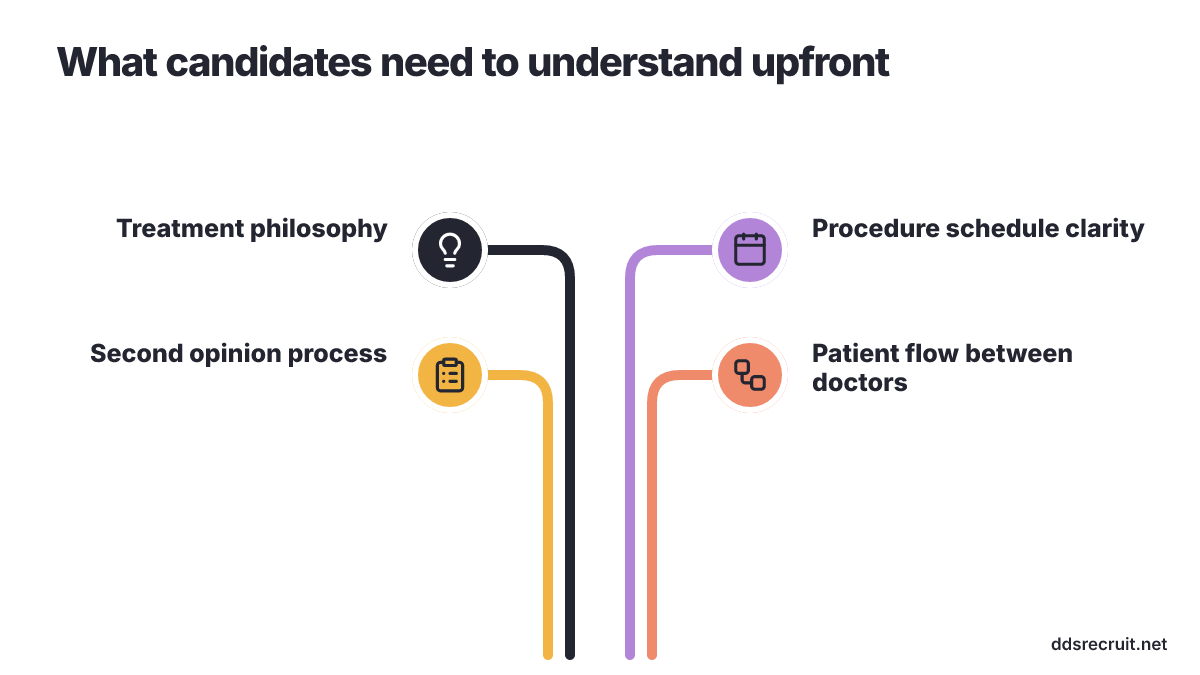
A clear employment offer lays out daily chairside realities alongside standard compensation terms. Candidates need to understand your treatment philosophy, which restorative or surgical procedures stay on their schedule, how second opinions are handled, and how staff move patients between doctors. Data from the American Dental Association Health Policy Institute on dental workforce shortages (American Dental Association, 2023) shows that providers have several options across the country, so they have little reason to decode an unclear job ad.
With 17 years spent inside dental practices, DDS Recruit is a dentistry-only recruiting firm for U.S. Practices and DSOs. DDS Recruit works in associate dentist recruiting, dental specialist recruiting for in-house specialists, and dental hygienist recruiting, and its One-year placement guarantee says: if a hire leaves within the first year, we search for a replacement at no charge.
A thorough hiring profile defines exact expectations instead of leaning on broad talk about positive workplace culture. Senior doctors should document diagnostic preferences, initial case volume, key auxiliary support, and the exact calendar time set aside for clinical review. Laying out those details early protects clinical alignment as patient volume grows.
Clinical alignment requirements change with the provider role. An in-house specialist depends directly on internal referral patterns, while a dental hygienist must follow established periodontal diagnosis protocols. Office managers need defined operational authority, and a DSO expansion director or Chief Clinical Officer needs clear agreement on governance before handling complex executive disputes.
What should an owner make clear in the first months?
Early onboarding sets the operational routines that keep clinical teams working in harmony. An incoming practitioner meets unfamiliar supply inventories, local patient demographics, financial arrangement scripts, and chairside assistance habits built over many years.
Structured communication keeps misunderstandings from reaching the patient chair:
- Review complex treatment plans and diagnostic radiographs together each week so both clinicians give patients the same recommendations.
- Set out specific procedural boundaries, identifying which endodontic, surgical, or clear aligner cases stay with the associate and which call for consultation or referral.
- Send operational questions to the practice administrator so daily front-desk workflows keep moving without clogging the senior doctor.
- Keep a standing thirty-minute clinical touchpoint each week rather than trying to squeeze in hurried conversations between patient appointments.
Locum tenens doctors and temporary coverage providers work under different expectations. A clinician covering a short medical leave needs basic facility access and scheduling parameters rather than intensive mentorship, while a long-term associate candidate needs dedicated owner time, open case review, and ongoing feedback tied to production milestones.
Where does the team fit into the owner–associate relationship?
Front-office leaders heavily influence how rapidly a newly hired dentist integrates into the practice community. When an administrator manages both patient scheduling and personnel issues, practice leaders must define which decisions belong to administrative staff, which sit with chairside dental assistants or hygienists, and which demand direct doctor oversight.
Direct team communication eliminates a common failure pattern where an associate respects the practice owner but remains an outsider to daily staff operations. When all schedule changes, equipment requests, patient complaints, and financial disputes route through the owner doctor, the associate feels like a temporary visitor rather than a permanent fixture of the clinical team.
Empowering direct collaboration also frees the senior dentist from constant administrative mediation. A clinic built for long-term retention allows the incoming provider to cultivate direct professional ties with hygienists, treatment coordinators, and front-desk personnel, establishing healthy autonomy across all clinical operatories.
How should growth, pay, and ownership be discussed?
Compensation agreements should remain transparent so associate doctors never spend energy trying to calculate their true earnings. Explaining clearly how production thresholds tie into patient volume and scheduling blocks builds trust from day one.
Career progression discussions demand identical transparency regarding future clinical or administrative responsibilities. Certain dentists desire equity buy-in opportunities, others want clinical leadership roles, and many prioritize a stable clinical position supported by quality continuing education and experienced mentorship. Effective long-term retention depends on understanding which professional milestones the associate actually values.
Ownership transitions function poorly as overnight handoffs where a clinician moves from employee to principal partner over a weekend. Successful transitions allow clinical autonomy, financial comprehension, staff leadership, and patient rapport to mature over a multi-year timeline, a process detailed in the American Dental Association's economic outlook (American Dental Association, 2024).
Prospective candidates actively evaluate your practice against open listings on national dental jobs boards. If a position advertisement focuses strictly on operatory production numbers and open days, it attracts applicants who view the office as a short-term financial stop rather than a professional home.
First step: write a clear associate profile
Draft a written associate profile before updating recruitment advertisements or revising compensation tiers. Detail your clinical standards, weekly case review commitments, procedural delegation boundaries, and practical schedule progression. Creating this document requires honest reflection on how many hours you can dedicate to chairside coaching each week while managing your own patient load.
Engaging specialized recruitment assistance helps practices find qualified candidates without pulling the owner away from patient care, yet the responsibility for nurturing the professional relationship remains with the practice owner.
Consult qualified healthcare attorneys and certified accountants regarding restrictive covenants, partnership purchase agreements, and tax implications, as those specialized legal matters extend beyond general retention strategies.
Frequently Asked Questions
How can dental practice owners retain associates long-term?
To retain dental associates long-term, practice owners should focus on building strong relationships from the start. This involves hiring for fit over production, clearly communicating expectations, providing mentorship, and ensuring associates understand the practice's clinical philosophy and growth opportunities. Open and honest conversations about career development and compensation are also crucial.
What should be included in a dental associate's employment offer?
A clear employment offer should outline daily chairside realities, compensation terms, treatment philosophy, and procedural responsibilities. It should also explain how second opinions are handled and how patients are moved between doctors. This clarity helps associates understand their role and reduces the likelihood of misunderstandings.
Why is mentorship important for retaining dental associates?
Mentorship is important because it provides structured clinical discussions and guidance during the first months of employment. It helps associates align with the practice's clinical standards and ensures they are not left guessing about expectations. Regular mentorship sessions build trust and support professional development, which are key to long-term retention.
How does team integration affect associate retention?
Team integration is crucial for associate retention as it helps new dentists become part of the practice community. When associates can collaborate directly with staff and are not isolated from daily operations, they feel more connected and valued. This sense of belonging encourages them to stay with the practice long-term.
What role does transparency in compensation play in associate retention?
Transparency in compensation builds trust between the practice owner and the associate. When associates clearly understand how production thresholds relate to their earnings and future career opportunities, they are more likely to feel secure and committed to the practice. This transparency is essential for fostering a long-term professional relationship.
Related reading
- How to Recruit and Retain Dentists: A Fit-First Plan
- Top 6 Strategies for Hiring Dental Hygienists Long-Term
- Dental Associate Placement Built for Long-Term Fit
- Associate Doctor Placement for Practice Transition